Zinc Die Casting

Your Professional Zinc Die Casting Supplier


Our goal is to become your true partner in the field of zinc die casting in China. Dexun is a global professional manufacturer of Foundry(Casting)&CNC machining products, with new product R&D design center. Our company is committed to applying advanced manufacturing technology and strict quality control standards to every product. The price is competitive and the product is quality-assured, which is a good choice for your long-term cooperation.


First 1234567 Last 1/14


Why Choose Us


Product Application

Our products mainly include various castings and casting processing, which are widely used in automobile, aerospace, motor, pump, gear motor and other industries.


Our Team

We have 32 professional technicians and 14 senior engineers. Professional R&D team of 15 people.


Our Certificates

Our company has 2 international certifications, is an ISO9001 and IATF16949 certified enterprise, and operate the PPAP Level 3.


Production Equipment

Our company has 16 CNC machining centers, 30 CNC machining lathes, 6 fully automatic CNC machines and automatic sampling equipment. 20 kinds of testing instruments ensure product quality: three-coordinate measuring machine (CMM), X-ray flaw detection system, spectrometer, projector, roundness tester, tensile testing machine, two-dimensional measuring instrument, caliper and special test.


Advantages of Zinc Die Casting

Easy assembly: Like any other die casting process, the entire part is cast as a single unit. Therefore, assembling reduces.


High precision with thin wall: Zinc alloys are strong compared to other alloys compatible with die casting. As a result, design optimization that calls for a reduction in the wall thickness can be put into place. Compared to materials such as aluminum, zinc can still exude structural integrity in such a case.


Better mechanical properties: Zinc alloys have an advantage over aluminum and magnesium based on mechanical properties such as strength and durability. This further improves their use in parts that require materials with high strength. Other mechanical properties include corrosion resistance, firmness, and toughness.


Cast complex geometries: Zinc’s excellent bearing and wear properties make it suitable to act as bushings for structures in motion. Furthermore, it is suitable for making parts with complex geometries due to its ability to form joints with other materials.


Longer tool life: Mold used in zinc die casting can last about ten times the aluminum die casting mold due to the zinc alloy’s less abrasive and lower melting point. As a result, there is a reduction in mold damage and an extension in the tool’s longevity.


Faster production: Zinc alloys have a low melting point and require a hot chamber die casting process that occurs at high-pressure injection. This will increase the cycle rate more than other materials, such as aluminum (zinc alloy die casting has a cycle rate that is 150-200% higher than aluminum).

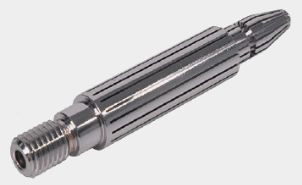
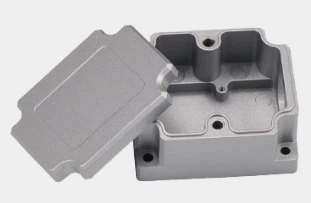
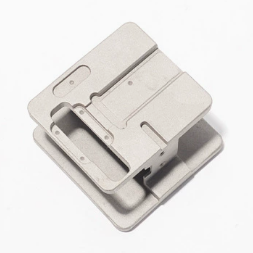
Zinc Die Casting Part


Applications of Zinc Die Casting
 

Automotive industry: The automotive industry extensively utilizes zinc die casting for various components. From engine brackets to transmission housings, zinc die-cast parts offer the necessary strength, precision, and cost-effectiveness the automotive sector requires.


Electronics industry: In the electronics industry, zinc die casting is vital in manufacturing connectors, housings, and other components. The process offers excellent electromagnetic shielding properties, ensuring the integrity of sensitive electronic devices.


Consumer goods industry: Zinc die casting finds widespread use in the consumer goods industry, providing high-quality parts for locks, hardware, and decorative elements. The versatility of the process allows for the production of intricate and aesthetically pleasing designs that enhance the appeal of consumer products.


Other industries benefiting from zinc die casting: Zinc die casting caters to industries beyond automotive, electronics, and consumer goods. It finds applications in aerospace, plumbing, medical devices, and more. The versatility of zinc alloys, combined with the cost-effectiveness and high-quality results of the process, make it a preferred choice across diverse industries.


Materials Used in Zinc Die Casting


Material Classification

Material Grade

Applicable Process

Datasheet

Zinc Alloy

Zamak 3

Die Casting

Zamak 3 Datasheet

Zinc Alloy

Zamak 5

Die Casting

Zamak 5 Datasheet

Zinc Alloy

Zamak 2

Die Casting

Zamak 2 Datasheet

Zinc Alloy

Zamak 7

Die Casting

Zamak 7 Datasheet

Zinc Alloy

ZA-8

Die Casting

ZA-8 Datasheet

Zinc Alloy

ZA-12

Die Casting

ZA-12 Datasheet

Zinc Alloy

ZA-27

Die Casting

ZA-27 Datasheet


Customized Zinc Die Castings


Zinc's versatility allows it to be customized and engineered to suit a wide range of design requirements. Before opting for zinc die casting for a custom project, it's crucial to evaluate key factors to ensure success. One of the primary considerations is selecting the appropriate zinc alloy that meets the application's specific needs. Consulting with experts in zinc die casting can help determine the best alloy for the job.


Choosing the right zinc alloy involves selecting an appropriate die casting method that aligns with the alloy's properties. Some alloys are better suited for hot chamber die casting, while others are ideal for cold chamber die casting. Key factors in this decision include the alloy's density, which is affected by copper content, and the overall cost of the process. Typically, zinc die casting is efficient, cost-effective, and optimizes resource use, making it a time-saving option.


Zinc is a versatile, robust, and corrosion-resistant metal alloy known for its malleability. It can be easily molded to suit various applications. Its durability and resistance to creep over time make it an excellent choice for a diverse range of projects.


Production Process of Zinc Die Casting

Preparing the die: Clean the die-cast mold to remove impurities. Afterward, lubricate the die for better ejection of the casted part after cooling. Conclude step one by clamping the die with high pressure.


Injection: Melt the zinc alloy and pour it into the injection machine’s shot chamber. Note that the shot chamber will be hot, as zinc casting is a hot chamber die casting. Afterward, inject the molten zinc material into the die-cast mold at high pressure.


Cooling and ejection: Allow the zinc to cool in the die-cast mold to take the mold shape. Unclamp the mold to eject the solid zinc casting out of the die.


Trimming: Alongside other finishing processes, trimming involves the removal of the excess metals that occurs due to die casting defects. Trimming is achievable using a trim die, saw, or other procedures.

productcate-450-450


Packaging and Shipping of Machining


Packing

Standard export wooden cases

Shipping

Container transport, by sea.


FAQ

Q: Why is zinc used for die casting?

A: Zinc alloys used in die casting development possess properties that make production easier when compared to other metal alloys. As a result, it provides an end-product that is durable and precise. The high ductility of zinc alloy means that it is ideal for the die casting process.

Q: What metal is best for die casting?

A: The most commonly used metals in the process are zinc, aluminum, and magnesium. While several other options like copper, lead, brass, and tin exist, they are less common and are used only for specific projects.

Q: Will zinc die cast rust?

A: The short answer is that zinc die cast parts will not rust when exposed to air. Basically, zinc itself if you leave it outside does not get the same corrosion that you would on a lot of other materials.

Q: Can zinc die cast be welded?

A: Gas welding is impractical as a production technique and arc welding is impossible with zinc alloy diecastings.

Q: How durable is zinc die cast?

A: Zinc die casting offers superior strength and durability compared to other methods of manufacturing by producing complex parts rapidly and using less energy while maintaining excellent surface finish.

Q: Does zinc rust faster than steel?

A: All zinc galvanized coatings are more corrosion resistant than bare iron or steel. Like all ferrous metals, zinc corrodes when exposed to air and water. However, zinc corrodes at a rate of 1/30 of that for steel.

Q: Can you powder coat die cast zinc?

A: Powder coating for zinc high pressure die castings is a popular surface finish within the home appliances, telecommunication, electrical component industries and display markets. As a result, it can significantly improve surface decoration and protection.

Q: Is zinc die cast strong?

A: Zinc die casting parts, known for their superior mechanical strength, have high tensile strength. The result in castings that withstand higher impacts than plastics or other metal alloys. Making them an ideal die casting alloy in various applications.

We're professional zinc die casting manufacturers and suppliers in China, specialized in providing high quality customized service. We warmly welcome you to buy cheap zinc die casting for sale here from our factory. Quality products and low price are available.

die casting, Zamak Die Casting, Zinc Casting Part

(0/10)

clearall