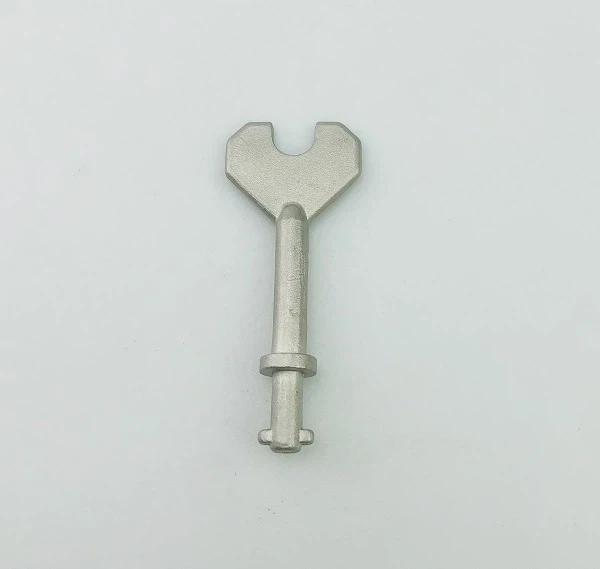
Investment Casting

Your Professional Investment Casting Supplier


Our goal is to become your true partner in the field of investment casting in China. Dexun is a global professional manufacturer of Foundry(Casting)&CNC machining products, with new product R&D design center. Our company is committed to applying advanced manufacturing technology and strict quality control standards to every product. The price is competitive and the product is quality-assured, which is a good choice for your long-term cooperation.


First 12 Last 1/2


Why Choose Us


Product Application

Our products mainly include various castings and casting processing, which are widely used in automobile, aerospace, motor, pump, gear motor and other industries.


Our Team

We have 32 professional technicians and 14 senior engineers. Professional R&D team of 15 people.


Our Certificates

Our company has 2 international certifications, is an ISO9001 and IATF16949 certified enterprise, and operate the PPAP Level 3.


Production Equipment

Our company has 16 CNC machining centers, 30 CNC machining lathes, 6 fully automatic CNC machines and automatic sampling equipment. 20 kinds of testing instruments ensure product quality: three-coordinate measuring machine (CMM), X-ray flaw detection system, spectrometer, projector, roundness tester, tensile testing machine, two-dimensional measuring instrument, caliper and special test.


Advantages of Investment Casting
 
01/

Smooth finish: Investment casting uses a ceramic mold that can produce a much smoother finish, typically averaging 125 ra surface finish as cast.

02/

Faster production: Investment castings cut down on labor time and produce quicker lead times because it greatly reduces the amount of machining required after casting.

03/

Tight tolerances: Investment castings hold tighter tolerances, which reduces the amount of machining required. The standard tolerance is +/-.005 per inch.

04/

Affordable tooling: Investment casting requires less expensive equipment and is inherently less dangerous, which allows for costs to remain low.

05/

Vast size range: Investment casting allows for both large and small casts. Intricate, miniature parts that are 1/10 of an ounce or less can be cast, and also large parts up to 50 pounds can be cast.

06/

Material variety: There are a variety of materials that can be used for investment casting which range from bronze, stainless steel, and even aluminum.


SS Investment Casting


Applications of Investment Casting

Automotive applications: In the automotive industry, investment casting is a versatile manufacturing process used for creating a variety of intricate components. For instance, it is extensively employed in engine production, where it fabricates parts like pistons, cylinder heads, and crankshafts. These components require high precision and uniformity, which investment casting can effectively deliver.


Marine applications: Investment casting is a critical process in the marine sector, producing a range of components that can withstand harsh marine environments. The versatility and reliability of this process are key factors in its widespread adoption in this industry.


Aerospace applications: In the demanding world of aerospace, where precision, durability, and lightweight materials are paramount, investment casting shines as a manufacturing process. This process is responsible for creating a plethora of components, each critical to the operation and safety of an aircraft.


Medical applications: The precision and versatility of investment casting make it invaluable in the medical sector. This process is used to produce a variety of intricate medical devices and implants that require high levels of accuracy, biocompatibility, and excellent surface finishes.


Food machinery applications: Investment casting plays a significant role in the food industry, primarily in the manufacturing of machinery for processing and packaging. The machinery used in this industry needs components that can maintain their integrity under rigorous cleaning and sterilizing procedures.


Oil & gas applications: In the oil & gas industry, the durability, precision, and reliability offered by investment casting are critical. The process is used to manufacture components that can withstand high pressures, extreme temperatures, and corrosive environments.


Specification of Investment Casting


Name

Investment Casting

Manufacturing Methods

Manufacturing According to Drawings

Process

Investment Casting

Test Content & Data

1. Chemical composition; 2. Mechanical properties; 3. Metallographic inspection; 4. Inspection of appearance, size, shape, and position tolerance; 5. Surface roughness;

Tolerance(mm)

Customized


Different Types of Investment Casting Materials

Steels Investment casting performs exceptionally with mild steel, high carbon steels, and other special steel alloys. Investment casted steel parts have a wide range of applications in aerospace, military industries, and shipbuilding.


Stainless steel Stainless steel has good strength, corrosion resistance, and a fine shiny surface. Common products include pump housings, valve components, gears, and bushings.


Aluminum alloys These are lightweight, corrosion-resistant, and have a good strength-to-weight ratio. The main aluminum products are aircraft and automotive parts.


Nickel alloys Nickel alloys have superior strength, corrosion resistance, and high thermal stability. Parts cast from these alloys are used for high-intensity applications in hot, oxidizing environments.

Cobalt-alloys

Cobalt alloys have strong resistance against wear, corrosion, chemical reactions, and extreme temperatures. These high-performance alloys have several applications in medical, food processing, and heavy machinery industries.

Cast iron

Cast iron has good strength and durability. It is useful in manufacturing electrical components, pipe fittings, tool hardware, etc.

Copper alloys

Copper alloys such as brass and bronze have medium-level tensile strength, ductility, thermal conductivity, and a great appearance. Owing to this, these alloys have applications in plumbing components, heat sinks, heat exchangers, etc.


Surface Finishing for Investment Casting Parts


Investment castings are near-net shape but have a slightly rough surface after the dewaxing stage. This is due to the patterns left on it by the primary core of the ceramic mold. Typically, the surface finish is 125 Ra, varying slightly with the material and quality of the mold.


As a result, for a smooth surface, a number of surface finishing treatments are available to achieve the desired surface quality. Some are based on material removal and others on coating the surface to neutralize and bury the rough surface beneath a layer of external coating.The choice of surface finish technique depends on factors like dimensional tolerance, preferred appearance, and mechanical properties.


Investment Casting Process


Creation of the master pattern

The master pattern is an exact duplicate of the product required. It May be made from wood, metal, plastic, clay, wax or other specialist alloys. Over the years, manufacturers have shifted to 3D printing master patterns due to their compatibility with cad/cam and improved dimensional accuracy.


Creation of the master die

The master pattern is used to create a master die. The master die’s creation technique depends on the master pattern’s material. For instance, if the master pattern is from steel, it can be placed in molten aluminium, since aluminium melts at 660°c (1,220°f), whereas steel melts at around 1500°c (2,732°f).


Creation of the wax pattern

There are several ways to produce wax patterns from master dies. One method involves filling the die with a small amount of wax and shaking it until it evenly coats the inner surface of the die and solidifies. This process is repeated until the desired thickness is achieved, resulting in a hollow wax pattern.


Creation of the shell mould

Wax patterns cannot withstand the high temperatures of molten metal. Therefore, ceramic moulds are created from wax patterns to endure the heat of molten metal. The ceramic mould is formed by immersing the wax pattern into a slurry of refractory material and allowing it to solidify.


Wax removal

Once the slurry has hardened, it is placed in a furnace to remove the wax and for further sintering of the ceramic mould. Sintering is the process through which items are hardened through pressure and heat but without liquefaction.


Pouring of molten metal and subsequent cooling

After the wax removal stage, the mould is cooled for testing. If any cracks or other imperfections are detected, they can be rectified using ceramic slurry or special cement.


Removal of casting from the mould

The divesting is typically carried out by hammering the mould to release the casting. Other methods to separate the metal casting from the mould include waterjetting, media blasting, vibration and chemical dissolution of the mould. The sprue, runners and other gating system components are then separated and recycled.


Post-processing operations

The investment casting process generally does not require subsequent machining. However, if the results are not as expected, the casting May need surface finishing operations before use. Typically, surface grinding with machine tools is adequate for polishing and trimming any surface defects.


Other Service of Investment Casting


Packing

Wooden case / Carton / Bulk / Individually Packaged / Customized

Shipping

Container transport, by sea.

Quality Assurance

Life-Long


FAQ

Q: What is meant by investment casting?

A: Investment casting, also known as precision casting or lost-wax casting, is a manufacturing process in which a wax pattern is used to shape a disposable ceramic mold. A wax pattern is made in the exact shape of the item to be cast. This pattern is coated with a refractory ceramic material.

Q: What is investment casting vs sand casting?

A: Sand casting produces a rougher surface finish and can produce net shapes within 1/4 of an inch. Investment casting produces excellent surface finishing and is the optimal choice for highly complex designs. Sand casting offers greater versatility with weight and size capabilities than investment casting.

Q: When to use investment casting?

A: Investment casting is the best option for producing low- to medium-volume parts that require complex shapes, high precision, and a smooth surface finish. It's ideal for aerospace components, medical implants, and high-end industrial applications where detail and material properties are critical.

Q: How accurate is investment casting?

A: Investment casting can achieve tight tolerances in the range of 0.005 inches, which is significantly more precise than what can be achieved with sand mold castings.

Q: What is the difference between investment casting and normal casting?

A: Investment casting employs disposable molds for each new casting, while die casting uses reusable molds. Investment casting accommodates both ferrous and non-ferrous metals, while die casting is only suitable for non-ferrous casting metals.

Q: Does investment casting require draft?

A: Unlike other casting methods, there are no draft requirements in the investment casting process, allowing for much more accurate dimensional conformance. Reduced Machining: Investment castings are produced to close tolerances and near-net size.

Q: How long does investment casting take?

A: Investment casting: 4 – 8 weeks would be typical. Permanent mold dies are usually very complex with multiple pieces and are machined from high hardness steels. This extends the initial time to produce samples this way. There may also be more machining needed.

We're professional investment casting manufacturers and suppliers in China, specialized in providing high quality customized service. We warmly welcome you to buy cheap investment casting for sale here from our factory. Quality products and low price are available.

Precision Investment Casting, Steel Investment Casting, casting

(0/10)

clearall