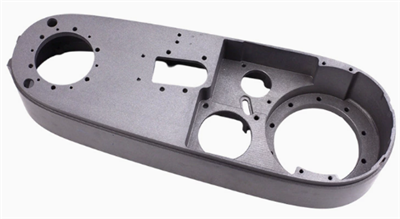
Aluminum Die Casting

Your Professional Aluminum Die Casting Supplier


Our goal is to become your true partner in the field of aluminum die casting in China. Dexun is a global professional manufacturer of Foundry(Casting)&CNC machining products, with new product R&D design center. Our company is committed to applying advanced manufacturing technology and strict quality control standards to every product. The price is competitive and the product is quality-assured, which is a good choice for your long-term cooperation.


First 12345 Last 1/5

 
Why Choose Us


Product Application

Our products mainly include various castings and casting processing, which are widely used in automobile, aerospace, motor, pump, gear motor and other industries.


Our Team

We have 32 professional technicians and 14 senior engineers. Professional R&D team of 15 people.


Our Certificates

Our company has 2 international certifications, is an ISO9001 and IATF16949 certified enterprise, and operate the PPAP Level 3.


Production Equipment

Our company has 16 CNC machining centers, 30 CNC machining lathes, 6 fully automatic CNC machines and automatic sampling equipment. 20 kinds of testing instruments ensure product quality: three-coordinate measuring machine (CMM), X-ray flaw detection system, spectrometer, projector, roundness tester, tensile testing machine, two-dimensional measuring instrument, caliper and special test.


Advantages of Aluminum Die Casting
 
01/

Lightweight and strong: Aluminum is a lightweight and strong material that is highly valued in various industries. Aluminum die casting allows for the production of lightweight parts with high strength-to-weight ratios.

02/

High precision: The die casting process produces highly accurate and precise parts with tight tolerances. This means that the parts produced through die casting require minimal or no post-processing, reducing the time and cost of production.

03/

Excellent surface finish: Aluminum die casting produces parts with a smooth and uniform surface finish. This eliminates the need for additional surface finishing processes, such as sandblasting or painting, which can be time-consuming and costly.

04/

Versatility: Aluminum die casting can produce parts of various shapes and sizes, making it a versatile manufacturing process. This allows manufacturers to create complex parts with intricate details that would be difficult or impossible to produce using other manufacturing processes.

05/

Cost-effective: Aluminum die casting is a cost-effective manufacturing process due to its high production efficiency, minimal post-processing requirements, and the ability to produce parts with high precision and accuracy.

06/

Durability: Aluminum die casting produces parts that are highly durable and resistant to corrosion, making them ideal for use in harsh environments or applications where parts are subjected to high stress or wear.


Applications of Aluminum Die Casting

Automotive industry

In the automotive industry, aluminum die casting is ideal to use due to its properties like durability and lightweight alternative to steel and iron. Moreover, its lightweight feature makes it an excellent choice for transportable applications.

Renewable energy

In some parts, aluminum die casting is used for power generation and distribution equipment in the renewable energy industry.

Aerospace

In the aerospace industry, aircraft demand components that can offer up-to-the-mark performance. Aluminum die castings are excellent for aircraft as they are lightweight, highly durable, and affordable as they can withstand harsh operating and environmental conditions and have better fuel efficiency.

Agriculture sector

Aluminum die castings can be utilized in several machines like combine harvesters or tractors in the agricultural industry. It is the best for use in these demanding applications as it offers durability and reliability.

Recreational vehicle

The aluminum die casting process helps create many recreational equipment and vehicle parts in the recreational equipment industry. For instance, structural and functional components like axles, chassis, counter mounts, etc., and cosmetic components like hood ornaments.

Industrial equipment

Aluminum die castings are also used for multiple components of equipment and systems in the industrial machinery & equipment industry. For instance, die-cast equipment components cover connecting rods, bearings, and pistons.


Types Of Aluminum Die Casting Processes


Hot chamber die casting: In this process, the injection mechanism is immersed in the molten metal. However, hot chamber die casting is not typically used for aluminum due to its high melting temperature, which could damage the injection system. This method is more suited for lower-melting-point metals like zinc or magnesium.


Cold chamber die casting: For aluminum die casting, cold chamber die casting is the preferred method. In this process, molten aluminum is ladled into a separate cold chamber before being injected into the die. This method helps protect the injection mechanism from prolonged exposure to high temperatures, which can extend the equipment's life.


Steps in Aluminum Die Casting Process

Making steel molds: You create and produce highly accurate steel molds, which are also known as die steel, to form aluminum parts. These molds consist of two halves: The first part, referred to as the fixed half, and the second part, known as the movable half. This gives the desired shape to the formed part when combined. Prepared in steel molds.


Choose aluminum grade: Depending on a particular part of the mission, you choose the most suitable aluminum grade in terms of strength, corrosion, and heat applications. Some of these are a380, which is well known for its excellent ductility as well as excellent machinability. While the a360 is known for its excellent resistance to corrosion.


Prepare aluminum for die casting: You clean and preheat the aluminum ingots to remove impurities and ensure consistent quality. Preheating minimizes temperature shocks during melting, reducing defects in the final product. This preparation step ensures better fluidity of the molten aluminum, enabling precise injection into the molds.


Melt aluminum material: To cast the aluminum, you heat the prepared aluminum ingots in a furnace to the point where it has its melting point of about 660°c (1220°f). Temperature control makes sure that the aluminum stays in the molten state without getting too hot, thus causing the properties of the aluminum to be affected.


Inject molten aluminum into the mold: You pour the molten aluminum into the injection system of the die casting machine. By applying high pressure, you force the aluminum into the steel mold so that it has to flow into the various cavities and details. This makes a high-pressure process in order to leave no pocket of air, hence a fully compacted, strong, and well-fixed part.

Aluminum Die Cast


Surface Finishes and Quality Inspection of Aluminum Die Casting


The final desired look is achieved by performing surface finishing procedures including polishing, deburring sharp edges, and cutting extra material. Anodizing or powder coating are examples of additional finishes that can be used to improve durability or visual appeal.


Once the component is finished, you do thorough quality checks to make sure it satisfies requirements for surface quality, mechanical characteristics, and dimensional tolerances.


Packaging and Shipping of Aluminum Die Casting


Packing

Standard export wooden cases

Shipping

Container transport, by sea.


FAQ

Q: How do you die cast aluminium?

A: The liquid aluminum is injected under high pressure into the cavity of a steel die, also known as a mold — you can see an example of a mold for automotive parts above. The die is made up of two halves, and after the molten aluminum has solidified, they are separated to reveal the cast aluminum part.

Q: What is the difference between die cast aluminium and aluminium?

A: In the casting process, pure aluminum has poor fluidity, good thermal conductivity, high melting point and good oxidation resistance. Die cast aluminum has strong fluidity, high plasticity, low melting point, and easy surface treatment.

Q: What is the best aluminum for die casting?

A: Alloy a380 is by far the most widely cast of the aluminum die casting alloys, offering the best combination of material properties and ease of production. It May be specified for most product applications.

Q: What is the minimum thickness for aluminum die casting?

A: The recommended wall thickness for aluminum die-cast parts ranges from 0.787 in – 0.1737 inch. However, the size is subject to change depending on the part's structure, size, the material used, and application, as you could have aluminum die casting components with wall thickness as thin as 0.020 in.

Q: Is die cast aluminum strong?

A: Both die casting aluminum and regular aluminum are strong materials with their own advantages and disadvantages. The choice of which material to use depends on several factors, including the specific application, the design of the part, and the manufacturing process.

Q: What is the draft angle for aluminum die casting?

A: In general, we suggest a 2-degree draft angle for cores, and a 1/2-degree draft angle for the cavity. With these angles, we've found that our die-cast aluminum parts can be removed without prying and damaging the parts.

We're professional aluminum die casting manufacturers and suppliers in China, specialized in providing high quality customized service. We warmly welcome you to buy cheap aluminum die casting for sale here from our factory. Quality products and low price are available.

Aluminum Die Cast, aluminum die casting, Aluminum Alloy Die Casting

(0/10)

clearall