

What is the difference between investment casting and copper die casting?
Oct 16, 2025
Hey there! As a copper die casting supplier, I often get asked about the difference between investment casting and copper die casting. It's a pretty common question, especially for those who are new to the manufacturing world. So, I thought I'd take a few minutes to break it down for you and help you understand which process might be the best fit for your project.
Let's start with investment casting. Investment casting, also known as lost-wax casting, is an ancient technique that has been around for thousands of years. It's a highly precise and versatile method that can produce complex shapes with excellent surface finish. Here's how it works:
First, a wax pattern is created in the shape of the desired part. This wax pattern is then coated with a ceramic shell, which is allowed to harden. Once the shell is hard, the wax is melted out, leaving behind a cavity in the shape of the part. Molten metal is then poured into this cavity, filling it up and taking on the shape of the original wax pattern. After the metal has cooled and solidified, the ceramic shell is broken away, revealing the finished part.
One of the biggest advantages of investment casting is its ability to produce parts with very high levels of detail and accuracy. It can handle intricate shapes and thin walls that might be difficult or impossible to achieve with other casting methods. This makes it a popular choice for industries such as aerospace, automotive, and jewelry, where precision is crucial.
Another advantage of investment casting is the wide range of materials that can be used. You can cast almost any metal or alloy, including stainless steel, aluminum, and titanium. This gives you a lot of flexibility in terms of choosing the right material for your specific application.
However, investment casting also has its drawbacks. It's a relatively expensive process, mainly because of the labor-intensive nature of creating the wax patterns and the ceramic shells. It also has a longer lead time compared to other casting methods, as each part has to be individually made. This means that it might not be the best option if you need a large quantity of parts quickly or if you're working on a tight budget.
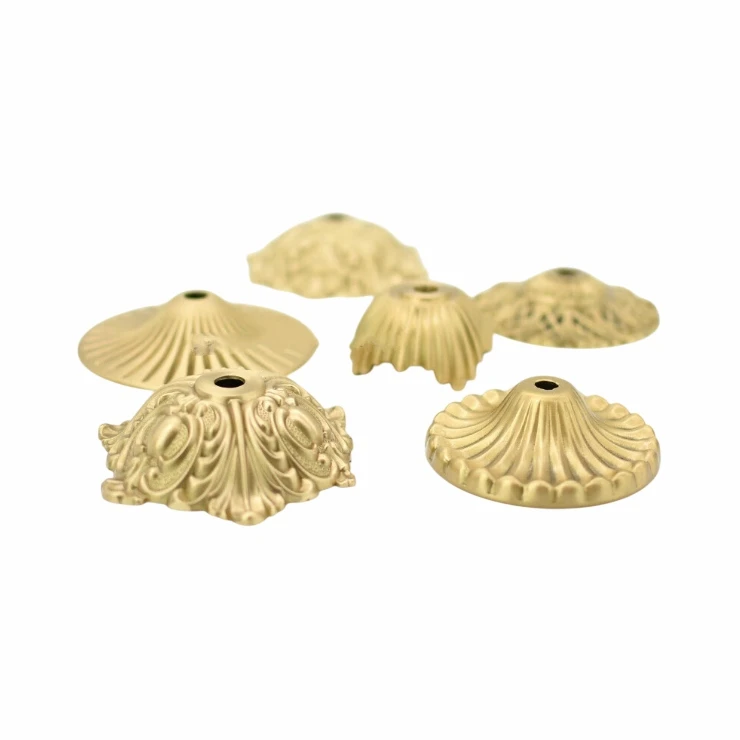

Now, let's talk about copper die casting. Copper die casting is a modern manufacturing process that uses high pressure to force molten copper into a steel mold, also known as a die. Here's how it works:
First, a die is created in the shape of the desired part. The die is made up of two halves that fit together precisely. Molten copper is then injected into the die under high pressure, filling up the cavity and taking on the shape of the die. After the copper has cooled and solidified, the die is opened, and the finished part is ejected.
One of the main advantages of copper die casting is its high production efficiency. It can produce a large number of parts quickly and consistently, making it a great choice for mass production. The high pressure used in the process also ensures that the parts have a good surface finish and dimensional accuracy.
Another advantage of copper die casting is the excellent mechanical properties of copper. Copper is a highly conductive metal, which makes it ideal for applications in the electrical and electronics industries. It also has good corrosion resistance and can withstand high temperatures, making it suitable for a wide range of other applications as well.
Copper die casting is also relatively cost-effective, especially for large production runs. The initial cost of creating the die might be high, but once the die is made, the cost per part is relatively low. This makes it a more affordable option compared to investment casting, especially if you need a large quantity of parts.
However, copper die casting also has its limitations. It's not as suitable for producing parts with very complex shapes as investment casting. The high pressure used in the process can sometimes cause issues such as porosity or shrinkage, which can affect the quality of the parts. It also requires a high level of expertise and specialized equipment, which means that it might not be the best option for small-scale production or for those who are new to the casting industry.
So, which process should you choose? Well, it really depends on your specific requirements. If you need a part with very high levels of detail and accuracy, and you're willing to pay a premium for it, then investment casting might be the way to go. On the other hand, if you need a large quantity of parts quickly and cost-effectively, and you don't require extremely complex shapes, then copper die casting might be a better option.
As a copper die casting supplier, I can offer you a wide range of copper die casting services. We use state-of-the-art equipment and the latest techniques to ensure that our parts meet the highest quality standards. Some of our popular products include High-voltage Electrical Appliance Terminal Block Brass Casting and Brass Swivel Joint For Lamp. You can learn more about our Copper Die Casting Process on our website.
If you're interested in our copper die casting services or if you have any questions about the difference between investment casting and copper die casting, don't hesitate to reach out. We're always happy to help you find the best solution for your project. Whether you're in the early stages of design or you're ready to start production, we can work with you to ensure that you get the high-quality parts you need at a competitive price.
In conclusion, both investment casting and copper die casting have their own unique advantages and disadvantages. By understanding the differences between the two processes, you can make an informed decision about which one is the best fit for your specific needs. And if you choose copper die casting, I'm here to support you every step of the way.
References
- "Investment Casting: A Comprehensive Guide" by John Doe
- "Copper Die Casting: Principles and Applications" by Jane Smith