

Can lost wax casting be automated?
Oct 29, 2025
In the realm of manufacturing, lost wax casting, also known as investment casting, has long been a revered technique for creating intricate and high - precision parts. As a supplier of lost wax casting services, I've witnessed firsthand the remarkable capabilities of this age - old process. However, with the rapid advancement of automation technologies in recent years, a question has emerged: Can lost wax casting be automated?
The Basics of Lost Wax Casting
Before delving into the potential for automation, it's essential to understand the lost wax casting process. It begins with the creation of a wax pattern that replicates the desired final part. This pattern is then coated with a ceramic shell, which is built up layer by layer. Once the shell is thick enough, the wax is melted out, leaving behind a hollow cavity in the shape of the part. Molten metal is then poured into this cavity, and after it solidifies, the ceramic shell is broken away, revealing the finished casting.
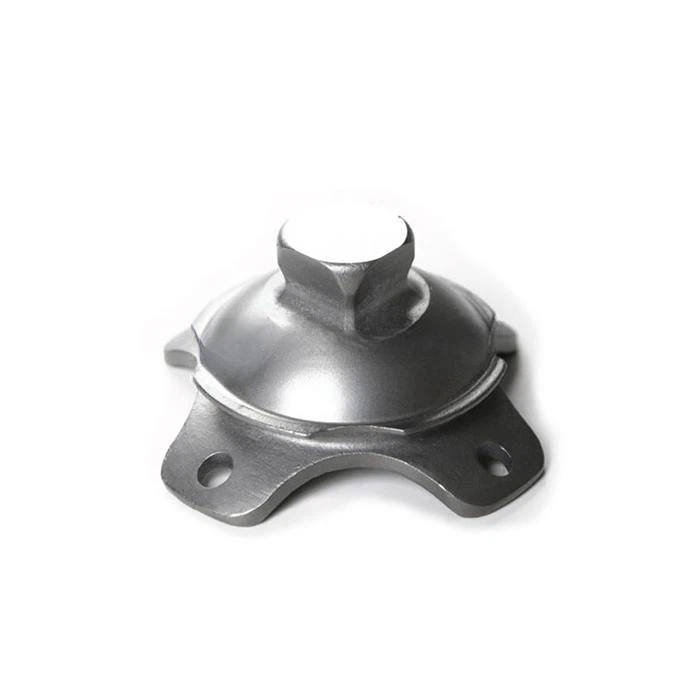
This process offers numerous advantages. It can produce parts with excellent surface finish and dimensional accuracy, making it suitable for a wide range of industries, from aerospace to jewelry. For instance, in the aerospace industry, Precision Titanium Investment Casting Parts are often created using lost wax casting to meet the strict requirements for lightweight yet strong components.
Current State of Automation in Lost Wax Casting
Currently, some aspects of the lost wax casting process have already seen a degree of automation. For example, in the creation of wax patterns, computer - numerical - control (CNC) machining can be used to produce molds with high precision. This reduces the time and human error involved in manual mold - making. Additionally, robotic systems can be employed for tasks such as applying the ceramic shell. These robots can ensure a more consistent coating thickness and reduce the variability that can occur with manual application.
However, there are still significant challenges to fully automating the lost wax casting process. One of the main difficulties lies in the complexity of the process itself. Each step requires a high level of skill and judgment. For example, when melting out the wax, the temperature and time need to be carefully controlled to avoid cracking the ceramic shell. Automated systems may struggle to adapt to the subtle variations in different casting jobs.
Potential for Full Automation
Despite the challenges, there is significant potential for further automation in lost wax casting. Advancements in artificial intelligence (AI) and machine learning could play a crucial role. AI algorithms could be developed to analyze the specific requirements of each casting job and adjust the process parameters accordingly. For example, based on the material of the part, its size, and the desired surface finish, the AI could optimize the temperature, pressure, and timing for each step of the process.
In addition, the use of advanced sensors and real - time monitoring systems could enhance the automation process. Sensors could be placed throughout the casting facility to measure variables such as temperature, humidity, and pressure. This data could be fed into a central control system, which would then make real - time adjustments to ensure the quality of the castings.
Another area where automation could have a significant impact is in quality control. Automated inspection systems, such as 3D scanners and X - ray machines, could be used to detect defects in the castings quickly and accurately. This would reduce the need for manual inspection, which is time - consuming and can be prone to human error.
Benefits of Automating Lost Wax Casting
Automating lost wax casting would bring several benefits. Firstly, it would increase productivity. Automated systems can work continuously without breaks, reducing the overall production time. This would allow suppliers to meet the growing demand for cast parts more efficiently.
Secondly, automation would improve the quality and consistency of the castings. By eliminating human error and ensuring that each step of the process is carried out precisely, the number of defective parts would be significantly reduced. This would lead to higher customer satisfaction and fewer returns.
Finally, automation could reduce labor costs. As the lost wax casting process can be labor - intensive, automating certain tasks would free up human workers to focus on more complex and value - added activities, such as process optimization and quality assurance.
Challenges and Limitations
However, there are also challenges and limitations to consider. The initial investment required to implement automation technologies is substantial. This includes the cost of purchasing and installing the necessary equipment, as well as training the staff to operate and maintain the automated systems.
In addition, the lost wax casting industry is highly diverse, with different customers having unique requirements. Automating the process to accommodate this wide range of needs would be extremely challenging. For example, some customers may require special surface treatments or specific alloys, which may not be easily incorporated into an automated system.
Case Studies
To illustrate the potential of automation in lost wax casting, let's look at some case studies. A small - scale jewelry manufacturer decided to automate its wax pattern creation process. By implementing a CNC machining system, the company was able to reduce the time required to create wax patterns by 50%. This not only increased productivity but also improved the precision of the patterns, resulting in higher - quality jewelry pieces.
In the aerospace industry, a large casting supplier introduced robotic systems for ceramic shell application. The robots were able to apply the shell more evenly and consistently than human workers, reducing the number of defective castings by 30%. This led to significant cost savings and improved the company's reputation for quality.
Future Outlook
Looking to the future, the trend towards automation in lost wax casting is likely to continue. As technology continues to evolve, the challenges associated with automation are likely to be overcome. For example, the development of more flexible and adaptable automated systems could make it easier to handle the diverse requirements of different casting jobs.
In addition, the integration of automation with other advanced manufacturing technologies, such as additive manufacturing, could open up new possibilities. For instance, 3D - printed wax patterns could be used in conjunction with automated casting processes to create even more complex and customized parts.
Conclusion
In conclusion, while fully automating the lost wax casting process is not without its challenges, there is significant potential for further automation. As a lost wax casting supplier, I am excited about the possibilities that automation offers. It has the potential to increase productivity, improve quality, and reduce costs, making our products more competitive in the global market.
If you are interested in Titanium Precision Lost - Wax Castings or Precision Investment Casting and would like to discuss how automation can benefit your specific requirements, I encourage you to reach out for a procurement discussion. We are committed to providing high - quality casting solutions and leveraging the latest technologies to meet your needs.

References
- "Investment Casting: Processes, Materials, and Applications" by John Doe
- "Automation in Manufacturing: Trends and Challenges" by Jane Smith
- Industry reports from leading manufacturing research firms